Rodrigo Valadão

Rodrigo Valadão

Professor · FGV EBAPE

How do organizations turn algorithmic possibilities into practice?

  • Organizations
  • Innovation
  • Algorithms & AI
  • Strategy
Profile

I am a professor at FGV EBAPE, where I study how algorithms, artificial intelligence, and other forms of technology become part of what organizations actually do. My research examines how people interpret possibilities, assemble tools and knowledge, and reshape organizational routines, decisions, and practices.

This interest has evolved alongside data-intensive and algorithmic technologies, from big data and data science to machine learning and, more recently, generative AI and AI agents. The technologies keep changing, but one question remains. Why do some possibilities take hold while so many others never materialize?

Drawing on organization theory, innovation studies, and practice theory, I examine how technologies are developed, adapted, and enacted, both within organizations and across broader field-level systems such as innovation ecosystems. My ideas and research have appeared in leading scholarly outlets, including Academy of Management Review, Administrative Science Quarterly, Research Policy, and Research in the Sociology of Organizations. In 2019 I co-organized the founding workshop of the Interpretive Data Science (IDeaS) community, an international network of scholars exploring how data, algorithms, and artificial intelligence shape organizations and society, which has since held seven conferences in Canada and the United Kingdom.

My academic perspective is informed by two decades as an executive in energy, oil and gas, and industrial infrastructure, and much of my work turns to these and other capital-intensive industries. In these settings, before a new possibility can be judged by its returns, an organization has to decide that it deserves capital, people, and attention, and that commitment has to hold over assets built to last for decades.

I hold a PhD in Strategic Management and Organization from the University of Alberta, pursued postdoctoral research at FGV EBAPE, and previously taught entrepreneurship and innovation at NEOMA Business School in France. I am also the founding partner at Portulano Advisors, an independent advisory focused on innovation decisions in capital-intensive industries.
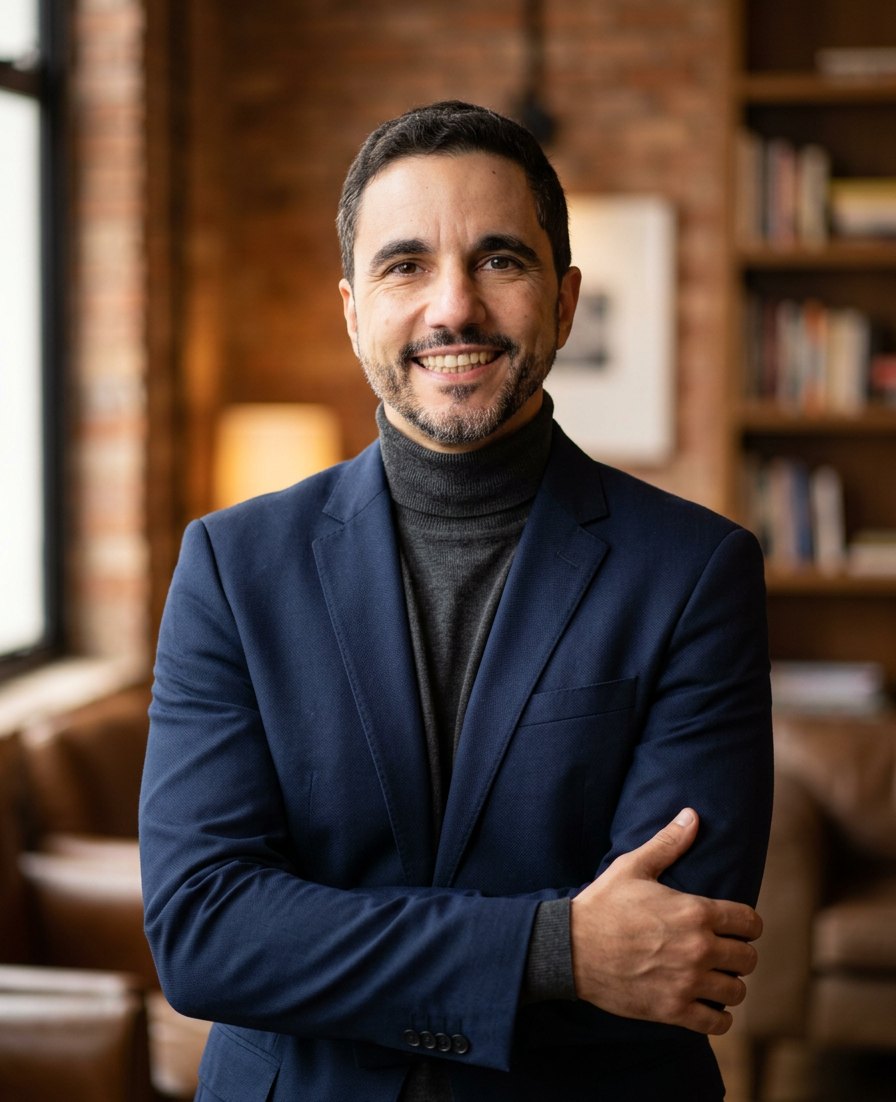
Rodrigo Valadão
Selected work
Academy of Management Review · 2026

The Axiology of AI Agents: How Human-AI Interaction Transforms Values from Espoused to Enacted

With Vern Glaser, Jennifer Sloan, and Evelyn Micelotta.

What happens to organizational values when AI agents begin making decisions and taking action? We examine how interactions between humans and AI transform the values organizations intend to uphold, tracing how those values change as they move through interconnected algorithmic systems and everyday organizational routines.

Read the paper →
Research in the Sociology of Organizations · 2025

Assembling Frankensteins: How Data Scientists Stitch Together Provisional Artifacts to Generate Novel Insights

With Vern Glaser and Timothy Hannigan.

How do data scientists actually create algorithms? We show how they combine and continually redesign tools, data structures, and other provisional artifacts to generate novel insights. Rather than following a linear development process, algorithm creation emerges through iterative and situated practices, and whether the result works is ultimately settled by the people who must act on it.

Read the chapter →
Research Policy · 2022

A New Tool for Policymakers: Mapping Cultural Possibilities in an Emerging AI Entrepreneurial Ecosystem

With Timothy Hannigan, Anthony Briggs, Marc-David Seidel, and P. Devereaux Jennings.

How can we understand the possibilities emerging within a new technological ecosystem? We develop an approach that combines cultural and material dimensions to examine an emerging artificial intelligence entrepreneurial ecosystem, showing what standard metrics such as patents, venture capital, and exits miss, and offering policymakers a practical tool to see it.

Read the paper →
Cambridge Handbook of Routine Dynamics · 2021

Algorithms and Routine Dynamics

With Vern Glaser and Timothy Hannigan.

Algorithms increasingly influence how organizations work, make decisions, and coordinate activities. We examine their role within broader assemblages of people, artifacts, theories, and practices, and explore how routine dynamics can help explain the organizational consequences of algorithmic technologies.

Read the chapter →
View all publications →
Teaching

My teaching bridges research and managerial practice, with a focus on innovation, artificial intelligence, and organizational change.

I began at FGV EBAPE teaching Applied Programming for Business, where students write code to solve a concrete business problem brought by the CEO of a fictional company, working with messy data and interviews with department heads.

At NEOMA Business School in France, I taught entrepreneurship and innovation, coordinated a research sub-area, and co-supervised a doctoral student. My teaching there received the School’s Pedagogical Excellence Award twice and its Pedagogical Innovation Award.

I also work in executive education. I co-taught the University of Alberta Executive MBA study tour to Brazil in 2023 and 2026, and I have presented research on AI to family business leaders. My focus is helping experienced leaders assess what emerging technologies can and cannot do for their organizations, particularly in capital-intensive industries.

Industry

My view of organizations and innovation comes from two decades in energy, oil and gas, and industrial infrastructure, at GE and Baker Hughes, Oceaneering, Halliburton, and the Port of Açu. My career runs from the shop floor to global commercial leadership, always on the business side of technology-intensive operations. My training followed a similar path, from technical school in mechanics and a technology degree in industrial production management to petroleum and gas engineering and, later, a PhD.

At GE and Baker Hughes, I moved through commercial and leadership roles, including the company’s executive development program, and eventually held global commercial product leadership in a business generating approximately US$550 million in annual revenue. I also served as regional commercial director for digital solutions in Latin America.

At Oceaneering, I managed field operations and a portfolio of major offshore contracts worth approximately US$45 million a year, at the intersection of subsea technology, complex operations, and relationships with major energy companies.

Most recently, I led business development for the oil and gas vertical at the Port of Açu, one of Brazil’s largest industrial port complexes, covering new businesses, industrial partnerships, and infrastructure opportunities, including a letter of intent for an offshore platform electrification project. I also represented the port on the Oil and Gas Council of FIRJAN, the Federation of Industries of the State of Rio de Janeiro, and contributed seven proposals to the federal public consultation on Brazil’s energy transition plan.

Across these roles, I worked on both sides of technological innovation, developing and commercializing industrial solutions, and deciding which opportunities deserved resources, investment, and commitment. That experience still shapes my research, especially the question of why some possibilities become established practice while others never materialize.

More on my LinkedIn profile →
Writing

Beyond academic publications, I write about organizations, innovation, and artificial intelligence, and about what it takes to turn technological possibilities into organizational results. I connect research with current developments in technology and management, looking not only at what new technologies make possible, but at the assumptions, practices, and organizational conditions that shape their adoption and consequences.

Read on Substack
Contact

I welcome conversations about research, academic collaboration, education, speaking, and advisory.

FGV EBAPE · Rio de Janeiro, Brazil